
Being different is one of the hardest things one can endure, especially in the developmental stage of life. I grew up in a time where sexuality was not as free and open as it is today, a world still shaded by unspoken rules. Despite growing up in a two-parent home, I spent significant time with my mother, and to say she was a class act would be an understatement. My mom’s light shone as bright as a star could, a beacon in my young world. Her love for me, even brighter — a warmth that enveloped me. As I reflect on my upbringing, two things ring true: I fell in love with cars at a young age, drawn to their sleek lines and powerful engines; that, I felt, was about the only “manly” thing about me. I didn’t grow up playing sports or chasing a ball. Instead, my childhood canvas was painted with moments of combing my mom’s hair, gently rubbing her feet, running her bath, and catering to her as much as a young child could. As my 42nd birthday approaches, I reflect that my parents were in their late 40s when I was born in 1983. My mother was three years my father’s senior, and she had taken ill as I grew into child independence, the vibrant hues of our early life together beginning to fade. I cannot explicitly say how I became what I’ve become, but I imagine those years with my mother were pivotal, carving paths within me. Perhaps her tender influence, so different from societal norms of masculinity, quietly forged a path for my unconventional interests and sensitivities. It’s a mystery I still ponder: how much of who I am was intrinsically me, and how much was molded by the gentle, constant pressure of her love?
I am a heterosexual man. I can say that now clearly and poignantly, like a sunrise breaking through the clouds, but that hasn’t always been the case. In the late 90s and early 2000s, it was relatively uncommon for men to get things like manicures, pedicures, facials, and have skin routines. But I’ve been doing these things for as long as I can remember, finding comfort in the ritual. I enjoy self-care above almost all things, even food. There is a bourgeoisie element in it all for me, a luxurious, almost rebellious pleasure. After my mother’s death on Mother’s Day in 1994, a dark shadow fell, and I don’t really know what happened to me. But when I wasn’t slicing my wrist in a desperate bid to escape, I was ensuring the scars were not visible, meticulously hiding the raw edges of my pain. Maybe self-care became a way for me to cover up all the pain I felt, a beautiful veneer over deep wounds. The sudden absence of her unwavering presence was like a seismic shift within me, opening fissures I hadn’t known existed. I wonder if the meticulous focus on my skin and appearance became a desperate, unconscious attempt to exert control over something, anything, when my internal world felt utterly chaotic and unmanageable. Was it a shield, or simply a tangible ritual to survive the untamed grief? It isn’t easy being adopted, let alone by an older couple, only to have one of those parents die, leaving an echoing void.
By the time I reached adulthood, my sexuality was a complex topic in my own mind, a tangled knot I struggled to untie. You see, I never thought that I was homosexual, but I couldn’t comprehend other people thinking so, their assumptions swirling around me like a fog. To complicate things, I didn’t mind men hitting on me, complimenting me, or giving me affectionate attention or anything of the like. I would politely say thank you, and internally, I was often quite flattered, a secret bloom of validation. And it was this acceptance, alongside others’ outward and often critical accusations, that fueled my questioning, casting long shadows of doubt. Why did others see what I didn’t feel? Was it my gentle demeanor, my lack of conventional ‘manly’ hobbies, or simply their own limited definitions of what a heterosexual man ‘should’ be? Their assumptions, however misplaced, created a confusing echo chamber in my mind, forcing me to scrutinize parts of myself I had never questioned. At this time, I don’t believe men had the same liberty as women. Women could graduate high school, enter college, perform cunnilingus on another woman, and carry on with their lives unscathed, or so it seemed, their paths smoother, less judged. Men don’t particularly have this leniency. My view of society is that even writing this reflection can sow doubt about my sexuality in the reader, the mere confession of questioning or not completely understanding gives credence to slander, like whispers growing into shouts.
I entered the penal system in November 2004. Up until this point, I had a very televised view of what a man was — a black and white image from a screen. Despite growing up with my father, after my mother’s death, I more or less ended up navigating adolescence and early adulthood alone, a ship without a clear compass. My father’s only concern was my faith, a singular drumbeat in his life, and sadly for him, I’m still a self-proclaimed atheist, yet guided by the quiet echoes of Christianity. It was in jail that I encountered manly men who turned out to be homosexual. Boy, that was news to me, a sudden splash of unexpected color on my monochrome understanding. I would spend the next year of my life navigating the judicial systems of Rhode Island and the Commonwealth of Massachusetts, a bewildering maze of unfamiliar rules. While inside, I kept mostly to myself, a silent observer. I was never harmed or assaulted in jail, thankfully, but I certainly know my fellow inmates likely perceived me as gay. I guess I allowed them to believe so, and I imagined that worked out to my advantage in keeping me safe, a shield woven from perception. It didn’t help my internal conflict, however. In October 2005, I ended my relationship with jail, briefly, but I still danced with crime, a shadow I couldn’t quite shake.
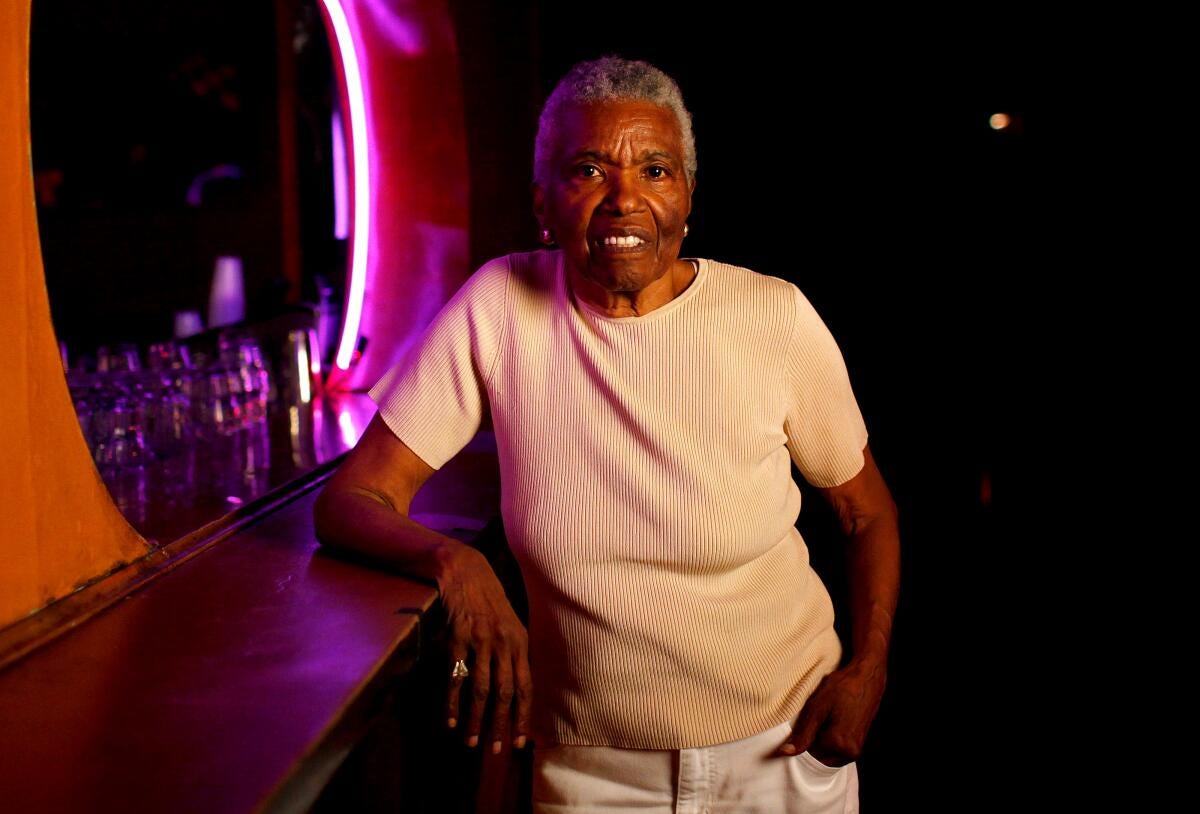
As I returned to Los Angeles after spending a year or so away, I became IT Support for a beautiful soul, Jewel Thais-Williams. Jewel was the owner of the Village Health Foundation and Jewel’s Catch One, the West Coast’s vibrant, pulsating version of Studio 54. Eventually, I became the cashier of the nightclub, sitting at the heart of its beating rhythm. This was an interesting series of events, a tapestry woven with unexpected threads. The Catch was a place of freedom, a wide-open sky where everyone seemed to be able to shed their masks and be their uninhibited selves. It was a fun and homely place for me, like finding a lost piece of my soul. I spent a lot of time with Rue, Jewel’s wife. We would talk throughout the week, our conversations a comforting balm. I bonded with her, a deep connection taking root. Even in her 70s, she radiated beauty and a remarkably youthful spirit, her presence a testament to enduring elegance. Jewel and Rue were like mothers to me, their warmth enveloping me, their wisdom guiding me. I love them immensely, and the news of Jewel’s death, a sudden, heartbreaking silence, is the reason for this writing. I cannot exactly explain how spending my weekends in a very queer and homosexually forward nightclub quelled my questioning sexuality, but it certainly did, like a gentle rain washing away confusion. Was it the sheer acceptance that washed over me, rendering external judgments irrelevant? Perhaps seeing such a wide spectrum of identities openly expressed made my own internal truth feel less isolated, less in need of constant validation or defense. The freedom wasn’t just for them; it was for me to simply be, without analysis. I haven’t changed. I still get manicures, I still use a Peter Thomas Roth face routine, and my personality still smells ripe with bourgeoisie, a signature scent of my self-made life. However, I no longer question my sexual identity or preference, standing firm and clear in who I am.
Rest in Power, Jewel Thais-Williams (09 May 1939 — 07 July 2025). Thank you for building a place of freedom and for illuminating so many paths, including my own. Your legacy at Catch One shines on.
Source: Los Angeles Times obituary for Jewel Thais-Williams.
This essay was first published on Medium and now lives in the Quincy James Freeman archive.